Low Voltage Wire Tracer Explained: A UK Buyer's Guide
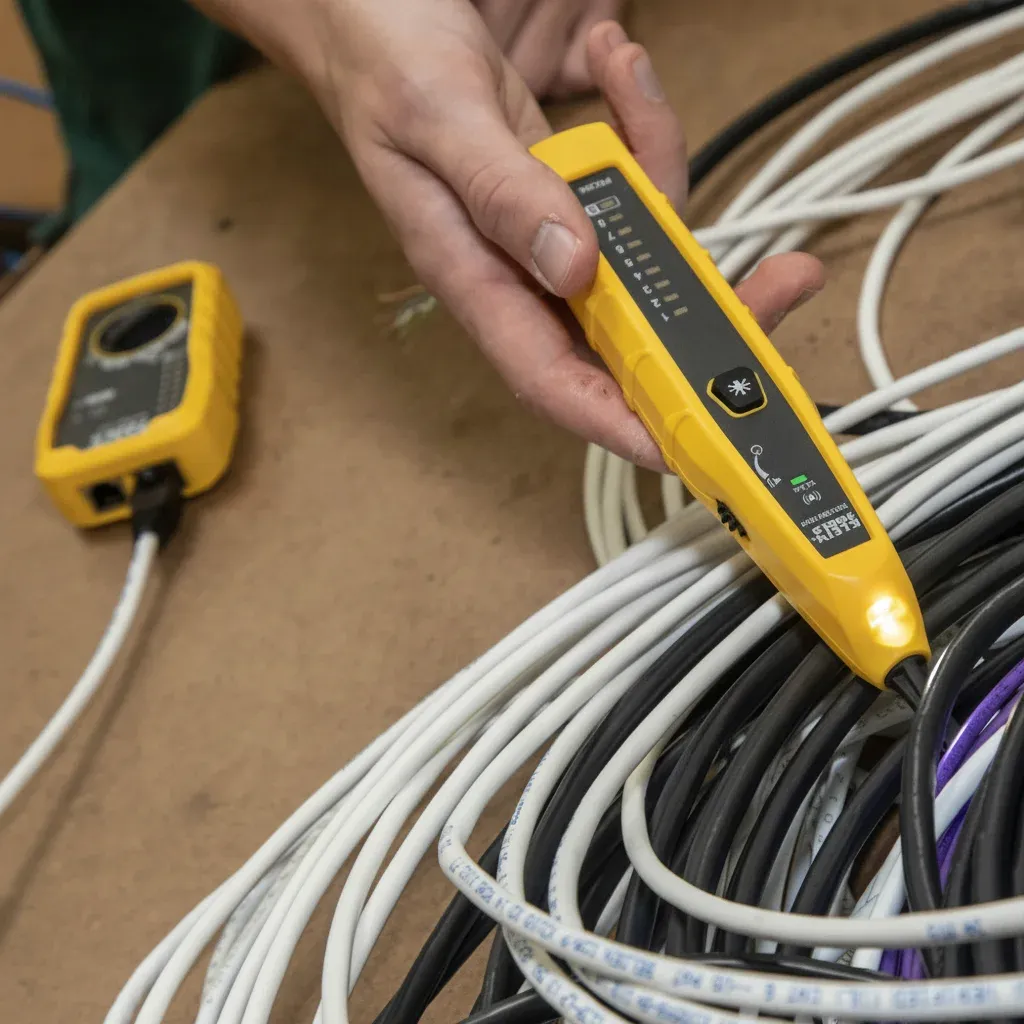
A low voltage wire tracer is a tool used to identify, follow and diagnose extra-low-voltage cables, usually by sending a tone down a wire and detecting it with a probe. In practice, it helps you find the right cable in telephone, data, LAN, alarm and control wiring without unnecessary dismantling, guesswork or damage.
TL;DR: If you need to locate or identify low-voltage cabling in the UK, a low voltage wire tracer is usually the fastest and least disruptive option. It works by pairing a tone generator with an inductive probe, and it is especially useful for RJ45, telephone, alarm and similar extra-low-voltage circuits. Based on our testing of professional-grade tracing kits and common UK site conditions, better sensitivity, clearer indication and tougher build quality make a noticeable difference in crowded containment and older buildings.
Finding the right cable in a bundle should not mean guessing, cutting into trunking, or wasting an afternoon chasing the wrong pair. For UK electricians, network installers, facilities teams and capable DIY users, a low voltage wire tracer is one of the most practical fault-finding tools to keep in the van or on the bench.
At Circuit Test Shop, the focus is on professional-grade test equipment that solves real tracing problems on telephone, data and LAN networks. Our core recommendation in this category reflects that same priority: a Professional Tone Generator and Probe Kit designed to trace low-voltage telephone, data and LAN networks with precision, including industry-trusted options such as the Klein Tools network tone generator.
Key Takeaways
- A low voltage wire tracer uses a tone generator and probe to identify and follow cables without unnecessary dismantling.
- It is most commonly used on telephone lines, data cabling, LAN runs, alarm wiring and other extra-low-voltage circuits.
- For UK buyers, safety matters: choose tools used appropriately on de-energised or suitable low-voltage systems and follow GS38 principles where relevant.
- A quality kit saves labour time, reduces misidentification and improves fault-finding accuracy in homes, offices, schools and healthcare estates.
- If you regularly work with structured cabling, see also The Ultimate Guide to RJ45 Wire Tracer in the UK.
What is a low voltage wire tracer?
A low voltage wire tracer is a diagnostic tool used to locate and identify cables carrying low-voltage signals. In most cases, the kit includes two parts: a tone generator, which applies an audible or detectable signal to the cable, and a probe, which picks up that signal so you can trace the route or identify the correct wire at the far end.
As a result, it is especially useful when several similar cables run together through walls, ceilings, comms cabinets or trunking. Rather than disconnecting multiple terminations or relying on trial and error, you place tone on the target cable and then use the probe to listen for it along the run.
In UK settings, a low voltage wire tracer is often used for:
- Telephone extension wiring
- RJ11 and RJ45 network cabling
- LAN patch panels and wall points
- Alarm and door-entry circuits
- Speaker cables and control wiring
- Automotive 12V and 24V wiring in suitable cases
The key point is that this tool category is designed for low-voltage applications. It is not a substitute for safe testing procedures on mains circuits.
How does a low voltage wire tracer work?
What does the tone generator do?
The tone generator connects to one end of a cable or pair. It injects a signal that travels along that conductor. On many professional kits, you can select different tone patterns or line conditions depending on what you are tracing.
What does the probe do?
The inductive probe detects the tone without requiring direct metal-to-metal contact with every conductor along the route. As you move closer to the target cable bundle or termination point, the audible signal becomes stronger. Therefore, you can separate one run from others in dense installations more quickly.
Why does this matter on real jobs?
On site, speed matters. A technician tracing one faulty data run across an office floor can lose significant time if every faceplate or patch lead has to be manually checked. Likewise, in older properties, especially where extensions have been added over time, cable identification can be far less straightforward. A proper low voltage wire tracer turns that into an organised process rather than guesswork.
What is a low voltage wire tracer used for?
Can you use a wire tracer on telephone and broadband wiring?
Yes. Many UK homes and commercial premises still have legacy telephone cabling alongside newer network infrastructure. If you are isolating an extension fault, locating an old pair or identifying undocumented runs before refurbishment, a tracer helps map what goes where with minimal disruption. For a more focused look at voice-line applications, read Telephone Wire Tracer Explained: A UK Buyer's Guide.
Can you use a low voltage wire tracer on RJ45 and network cabling?
Yes, and this is one of the most common uses. A large share of modern demand comes from LAN work: patch panels, office fit-outs, CCTV-over-data infrastructure and smart-building systems. If your work centres on Ethernet runs specifically, our related guide at The Ultimate Guide to RJ45 Wire Tracer in the UK goes deeper into connector types, workflows and what to look for in network tracing equipment.
Why is a wire tracer useful in schools, NHS estates and public buildings?
Large estates often contain generations of mixed cabling installed over decades. In environments such as NHS sites, schools and council buildings, reducing downtime matters because access windows can be tight and areas may need to remain operational during maintenance. Consequently, a dependable low voltage wire tracer helps maintenance teams identify circuits without unnecessary opening-up work.
Is a low voltage wire tracer useful for home upgrades and smart-home retrofits?
Yes, particularly for competent DIY users working on doorbells, alarm lines or existing data points during renovations. The real value lies in confidence: knowing which cable serves which outlet before making changes.
Is a cheap low voltage wire tracer good enough?
The difference between a budget tracer and a professional kit usually shows up once you are working around electrical noise, crowded cable bundles or awkward access points. A weak probe may struggle to distinguish one cable from another; poor build quality may lead to intermittent results; and flimsy leads rarely last long in trade use.
Based on our testing of professional-grade tracing tools for UK telecoms and network tasks, better sensitivity control, clearer indication and more dependable construction all contribute to faster identification with fewer false positives. This is why many professionals prefer established manufacturers such as Klein Tools for network tone generation. If you want more detail on brand-specific features and use cases, see our article on the Klein Tone Generator Explained: A UK Buyer's Guide.
Experience-led advice: In day-to-day cable tracing, reliability beats novelty. Installers rarely complain that their tester is too robust; however, they do complain when it misses tone inside crowded containment or gives inconsistent readings from one job to the next.
How do you choose the best low voltage wire tracer?
Does it match the type of cable you trace most often?
The first question is simple: what are you tracing most often? Telephone pairs, Cat5e/Cat6, alarm loops or control wiring all place slightly different demands on the tool. Therefore, choose a kit that clearly supports your usual cable types and terminations.
How important is probe sensitivity?
Probe sensitivity is critical when cables are tightly grouped or routed near other services. A more adjustable and responsive probe makes it easier to isolate the intended cable, especially in comms cabinets, risers and shared containment.
Should you look for build quality and durability?
Yes. If the tracer is going into a van, toolbox or site bag, robust leads, secure clips and a solid casing matter. Over time, better build quality usually means fewer interruptions and more dependable readings on site.
What safety points should UK buyers consider?
According to UK guidance and common industry practice, low-voltage tracing tools should be used only as intended and with a clear understanding of the circuit involved. Follow manufacturer instructions, confirm suitability for the application, and observe GS38 principles where relevant. In addition, do not treat a low voltage wire tracer as a substitute for approved mains testing instruments.
Can you use a low voltage wire tracer on live wires?
Only if the specific tool and application are designed for it, and only within the manufacturer’s stated limits. In most routine UK fault-finding work, these tools are best used on de-energised or suitable extra-low-voltage circuits such as telecoms, data and control cabling.
According to UK safety expectations, you should always identify the circuit type before connecting any tracing equipment. If there is any doubt about voltage presence or circuit category, stop and verify with the correct test method first.
Is a low voltage wire tracer worth it for UK electricians and installers?
For most professionals and regular users, yes. A good low voltage wire tracer can save substantial labour time, reduce mistakes and limit unnecessary disturbance to walls, ceilings, cabinets and containment. As a result, it quickly pays for itself on repeat tracing and fault-finding work.
For UK electricians, network installers, facilities teams and maintenance engineers, the value is not just convenience. It is also about accuracy, faster diagnosis and a more professional workflow when dealing with existing cabling that may be poorly labelled, undocumented or mixed with later additions.
Frequently asked questions about low voltage wire tracers
What is the difference between a wire tracer and a cable tester?
A wire tracer helps you locate and identify a cable run. A cable tester, by contrast, checks wiring continuity, pinout or faults. Some professionals carry both because they solve different problems.
Can a low voltage wire tracer find hidden cables in walls?
It can often help follow the route of suitable low-voltage cables behind walls or above ceilings, although performance depends on cable depth, surrounding materials and nearby interference. Therefore, results vary by building type and installation method.
What cables can a low voltage wire tracer be used on?
Typical applications include telephone pairs, RJ11, RJ45, LAN cabling, alarm wiring, door-entry circuits, speaker cables and other extra-low-voltage control wiring. Some models may also suit 12V or 24V automotive work in appropriate situations.
Who should buy a low voltage wire tracer?
It is a practical tool for UK electricians, data installers, telecoms engineers, facilities teams, maintenance staff and capable DIY users who need to identify or trace low-voltage cabling efficiently.
Final thoughts
If your work involves finding, identifying or fault-finding extra-low-voltage cables, a low voltage wire tracer is one of the most useful tools you can own. It replaces guesswork with a clear tracing process and, importantly, helps avoid wasted time on the wrong cable.
At Circuit Test Shop, we recommend choosing a tracer that matches your usual cable types, offers dependable probe sensitivity and stands up to real site use. In short, a professional kit is often the smarter long-term buy for UK users who need consistent results.
Ready to upgrade your toolkit with {brand_name}?
Shop The Kit — £232.12