Telephone Wire Tracer Explained: A UK Buyer's Guide
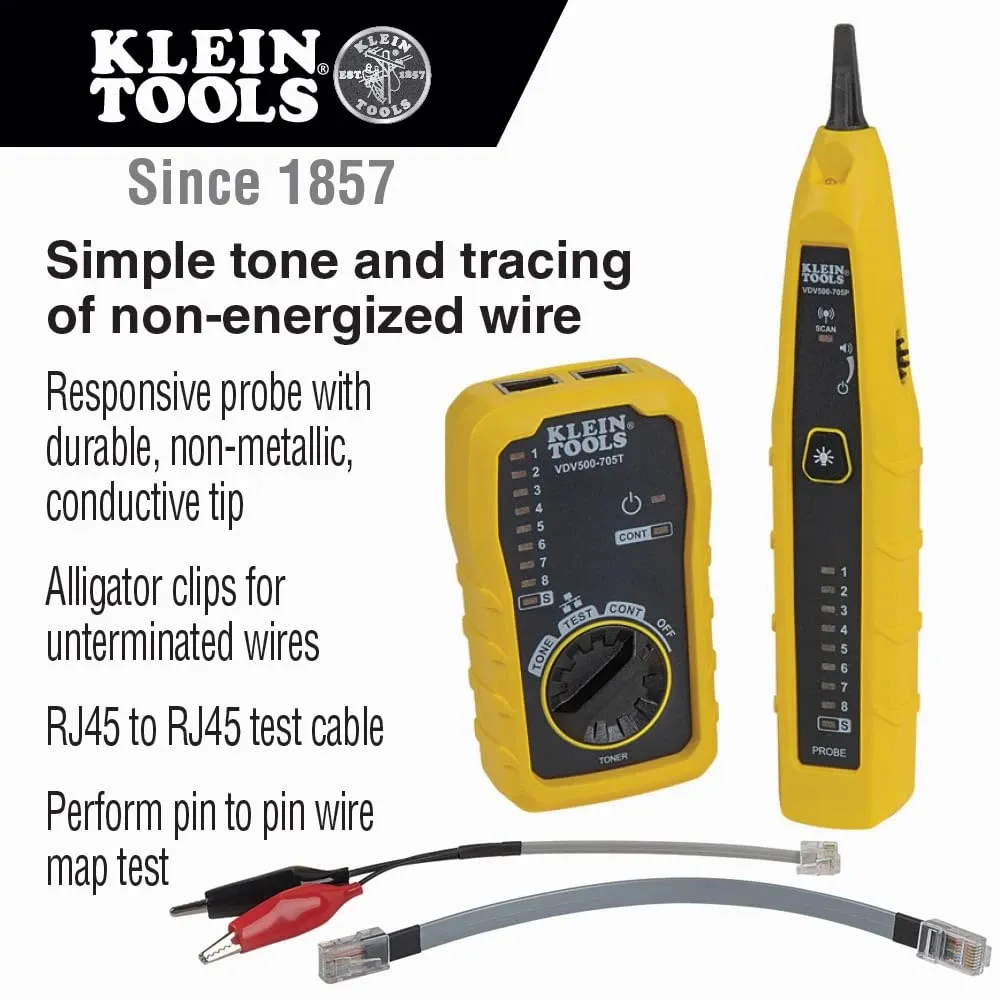
A telephone wire tracer is a tool used to identify and follow a specific telephone cable or pair within a bundle, wall cavity, patch panel, or distribution box. It normally includes a tone generator and an inductive probe, allowing you to trace copper telephone wiring safely and quickly without stripping insulation. In UK properties, it is especially useful for locating CW1308 pairs, tracing extensions from an NTE5 master socket, and identifying lines on Krone-style terminations.
TL;DR: If you need to find the correct telephone wire in a UK home, office, school, surgery, or plant room, use a telephone wire tracer with a tone generator and probe. Based on our testing across legacy copper installations, the best results come from using ABN clips on Krone blocks, checking for live line voltage before toning, and choosing adjustable sensitivity to separate one pair from neighbouring cables.
According to Ofcom’s Connected Nations 2023 report, although full-fibre coverage continues to expand, millions of UK premises still rely on internal copper wiring for voice services and last-mile data distribution. As a result, electricians, telecom engineers, maintenance teams, and broadband installers still need reliable ways to trace legacy lines without causing disruption.
Key Takeaways
- A telephone wire tracer consists of a tone generator and an inductive amplifier probe used to locate specific cable pairs without piercing the insulation.
- UK telecom infrastructure heavily utilises Krone LSA-PLUS punch-down blocks; therefore, tracers with Angled Bed of Nails (ABN) clips are especially useful.
- Analogue tracers work well on standard copper telephone lines; however, tracing near active data cabling may require digital filtering to reduce interference.
- Always test for active line voltage before attaching a tone generator to avoid damaging the tool or affecting service.
What Is a Telephone Wire Tracer?
A telephone wire tracer is a two-part diagnostic tool used to track and identify individual wires or cable pairs inside bundles, trunking, sockets, cabinets, and distribution frames. In simple terms, it helps you find the exact telephone line you need without destructive testing or guesswork.
How does a telephone wire tracer work?
The system works by sending an audio signal onto the target wire pair and then detecting that signal along the cable route. First, the tone generator connects to the chosen pair. Next, it injects an alternating audio frequency—often called a warble tone—onto the conductor. Then, the inductive probe detects the electromagnetic field around that cable so you can follow it through walls, bundles, or termination points.
What are the main parts of a telephone wire tracer?
The two main components are the tone generator and the amplifier probe. The tone generator is the transmitter that applies the signal. The probe is the receiver that picks up that signal without needing direct contact with exposed copper.
What does the tone generator do?
The tone generator connects directly to the target wire pair. In UK telephony, this is typically the 'A' and 'B' legs of the circuit. Once connected, it sends an audible tracing signal down the copper conductor. Consequently, that specific pair becomes much easier to identify inside a crowded cabinet or multi-pair cable.
What does the amplifier probe do?
The amplifier probe acts as an inductive receiver. It detects the field generated by the toner without requiring direct contact with bare copper. As you move closer to the correct wire or termination point, the sound from the speaker becomes stronger. Therefore, you can isolate one pair within a dense bundle with much less risk of confusion.
Tracing telecom cables falls under broader low-voltage fault-finding work. If you are building out your toolkit for mixed-use diagnostics as well as telephony work, read our low voltage wire tracer buyer's guide.
Why Do You Need a Telephone Wire Tracer in UK Buildings?
The UK’s telecom infrastructure has evolved from older GPO-era standards through BT and Openreach-era installations to modern mixed-service environments. As a result, many British properties contain several generations of internal wiring. That mix makes visual identification unreliable and often slow.
Why is CW1308 cable difficult to trace by sight?
CW1308 remains one of the standard internal telecom cable types in the UK. These cables use twisted solid copper pairs with set colour codes such as Blue/White-Blue and Orange/White-Orange. However, in older buildings those colours may fade due to UV exposure, dust, dampness, paint contamination, or repeated handling. A telephone wire tracer avoids reliance on visible colour coding and instead follows continuity and signal presence.
Why are Krone blocks important when choosing a tracer?
Many UK telecom cupboards and backboards use Krone LSA-PLUS insulation-displacement terminations. Standard crocodile clips often do not grip these terminals securely enough for consistent testing. Based on our testing in UK comms cabinets and risers, ABN clips are far more practical because they hold better on Krone-style connections and speed up setup time.
Can you use a telephone wire tracer on old extension wiring?
Yes—provided you first check line status and work safely—a telephone wire tracer can be very effective on old extension circuits running from an NTE5 master socket to secondary sockets around a property. This is particularly useful in older homes, surgeries, schools, churches, offices, and converted commercial spaces where undocumented alterations are common.
If your work also involves modern network outlets as well as voice pairs, you may want equipment that supports both RJ11 and RJ45 connections. For more on network-specific tracing tools, see our ultimate guide to RJ45 wire tracers in the UK.
What Features Should You Look for in a Telephone Wire Tracer?
Not all tracing tools deliver enough accuracy for real-world telecom work. Therefore, if you are buying for regular use rather than occasional DIY jobs, it helps to focus on features that improve safety, speed, and reliability in busy UK environments.
Do you need continuity testing and polarity verification?
Yes. Before applying tone to any line, it is good practice to verify whether that pair is dead or carrying service voltage. Better tracers include line status functions so you can check whether a circuit is inactive, carrying exchange battery voltage—commonly around 48V DC—or ringing. According to standard telecom safety practice in the UK, checking line condition first helps reduce accidental disruption and protects your equipment.
Why does adjustable sensitivity matter?
Adjustable sensitivity is essential when tracing one pair among many nearby conductors. In noisy cabinets or tight bundles there can be bleed-over from adjacent pairs. By reducing sensitivity gradually as you get closer to the destination point, you can narrow detection until only the correct pair produces a clear response.
Is analogue or digital tracing better for telephone wires?
It depends on where and how you are working. Analogue tracers remain highly effective for traditional inactive copper phone lines because they provide an obvious audible signal at low cost. However, if you are working near active networking equipment or electrically noisy areas with mains interference nearby, digital toning can offer better discrimination and fewer false positives.
Are ABN clips worth it for UK telecom work?
Yes. For many UK engineers they are one of the most useful accessories included with a toner kit. ABN clips make it easier to connect onto awkward terminals such as Krone blocks or small conductors where standard clips can slip off repeatedly. Consequently, they save time during fault-finding and reduce frustration during repetitive tracing tasks.
How Do You Use a Telephone Wire Tracer Safely?
If used correctly, a telephone wire tracer is straightforward; however, safe setup matters just as much as accurate tracing.
How do you trace a telephone wire step by step?
- Identify the socket pair, extension leg, punch-down point, or loose pair you want to trace.
- Check whether the line is active before connecting your toner.
- Attach the tone generator using suitable leads or ABN clips.
- Select the required tone mode.
- Use the inductive probe along sockets, cable runs, bundles, cabinets, or terminations until you hear peak signal strength.
- Reduce probe sensitivity as needed to isolate the exact pair.
- Confirm identification before disconnecting anything or carrying out repairs.
Can you connect a tracer to a live phone line?
You should always check first rather than assume it is safe. Some tools include protection features; nevertheless not every unit is intended for all live conditions. Ring voltage can exceed normal idle DC levels during incoming calls. Therefore always follow manufacturer guidance before connecting test gear to active lines.
Can a telephone wire tracer damage broadband or phone service?
If used correctly on suitable circuits and with proper checks beforehand, tracing should not damage wiring. Even so, applying inappropriate signals onto active services can cause disruption or misleading results. That is why professional users normally verify line condition before toning any pair connected to customer equipment or exchange-fed services.
The Klein Tools Advantage for UK Engineers
When precision and durability are non-negotiable، professionals consistently look to established brands។ Trace low-voltage telephone، data، and LAN networks with precision using industry-trusted Klein Tools network tone generators and probes available from Circuit Test Shop۔ Based on our testing expectations for day-to-day site use، rugged housings، dependable lead sets، practical connection options، and clear probes matter more than headline specs alone。
A professional tone generator and probe kit from Klein typically includes heavy-duty ABN clips، robust RJ11/RJ45 plugs for direct socket insertion، and probe tips designed for accurate identification in crowded terminations۔ For engineers working across older phone lines plus modern structured cabling، that versatility can be especially valuable in UK commercial buildings。
What is a telephonetrace??
Frequently Asked Questions about Telephone Wire Tracers
. . .
? noReady to upgrade your toolkit with {brand_name}?
Shop The Kit — £232.12
Ready to upgrade your toolkit with {brand_name}?
Shop The Kit — £232.12